

Wonder Can S-t-r-e-t-c-h Time
Today, I delight to the breeze on my face and arms, while sitting outside on our back patio. Paying attention to this tactile sense slows down time for me. I read a book, scroll my phone – or nap, which I’m particularly fond of doing. I relax and regenerate energy.
Looking back in time, I also experienced this same phenomenon years ago. In the spring and fall, when I lived in Ames, Iowa and worked at Iowa State University I would walk to work. About 30 minutes door to door.
Then as now, I enjoyed the feel of wind on my face, arms, and legs. The motion of walking that pumped my heart, also pumped my soul. When I walked to work, time moved in slow motion, compared to other days. I accomplished more on those days. Therefore, double the pleasure.
A GUIDE TO WONDER
Monica C. Parker’s book, The Power of Wonder: The Extraordinary Emotion That Will Change the Way You Live, Learn, and Lead, brings together research on topics such as the magic of wonder, our awareness and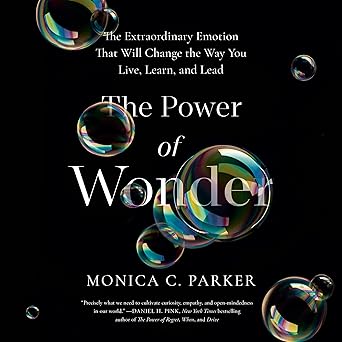 attention, and the resulting awe and its benefits. Paying attention to all our senses and staying in the present, in my opinion, supports her theme and claim that wonder will change the way we live, learn, and lead.
In her book, Parker tells us that wonder doesn’t materialize in our fast-paced lives with grueling schedules. Hence we miss chances to experience wonder, because we don’t slow down. It’s a must.
TIME AND PERCEPTION
Time isn’t a fixed or simple concept. The way we preceive time can make it feel like its speeding up or slowing down. We often hear about a state of “flow” when we lose track of time. Like when we’re having a good time or so engrossed in what we are doing that time flies. This happens to me when I work on a chapter of my work-in-progress or a creative nonfiction essay. Six hours pass and I barely notice.
THE NEED FOR WONDER
We crave wonder (without knowing it) with overwhelming news cycles, hectic work schedules, the demands by our social, religious and civic organizations. We are constantly bombarded and distracted from the simple things in life.
Wonder may be free, but it isn’t always easy to slow down.
Simple ideas may include to get outside, touch the bark of a tree, smell the pungent scent when trimming a lantana plant in Texas, to distinguish bird songs, feel the vibration of a bee buzzing, observe the various flight patterns of birds. Now these are moments of wonder and awe that can slow down time–expand and stretch it.
We may find wonder in writing a simple poem, sketching a scene, playing a favorite tune on the piano or listening to it on Spotify or iTunes. Wonder can be discovered in hearing a friend tell of a discovery in their field of science. We can marvel at the news of those from around and outside the country who came to conduct rescue and recovery efforts after a disaster occurs. Just as it has in my hometown, Kerrville, Texas, in the July 4th, 2025 Guadalupe River Flood that took over one hundred lives.
Wonder comes in many guises.
WHAT BRINGS US WONDER?
However, Monica Parker encourages us to find our own “wonderbringers,” those experiences that can bring wonder. We have to discover those things and pursue them with purpose and intent.

Wonder is the catalyst to build the social and emotional competencies we need to make us more open, more curious, more compassionate … more human. (Monica C. Parker)
Her wonderbringers include travel, fellowship with friends, and Trey Anastasio’s guitar. Mine are nature encounters, meals with friends, travel, and reading.
What are your “wonderbringers?” What lights you up? What sets your senses alive?
CHALLENGE
Set yourself up to pay attention to each of the five senses every day this week: sight, sound, smell, taste, touch. This experiment could open a new way of paying attention to our daily lives and shape your sense of wonder. (Weeks ago I suggested another way to pay attention. Here’s a reminder. “Look up, look down, look all around.”)
Please share you experiments, your thoughts, your sense of wonder with us. We can learn from each other.
Thanks for reading and responding.
To learn more about my books in which young women are experimenting with ways to pay attention to their lives from the ups and downs, adventures and misadventures. In which young women build their personal psychological agency through travel—to become the authors of their own lives.
FICTION
 In Song of Herself, Fiona Weston, an Iowa horsewoman in work boots and trousers, sails to India in 1906 to discover her journey is not the quest for which she had yearned, nor the escape from those who ridicule her unconventional ways. In Song of Herself, Fiona experiences a journey fraught with obstacles that creates a sturdy sense of self in which she comes to accept irreconcilable differences and still can sing her song of self.
NONFICTION
 Rhonda’s memoir, At Home in the World: Travel Stories of Growing Up and Growing Away, portrays her growing up in rural Arkansas launched by an empowering mother to journey into the world as tourist, missionary, and independent young woman. These forays mirror her spiritual life, while telling a mythic story of a mother-daughter relationship and a missionary-church conflict that will be resolved through healthy development.


 killer wasps mating