Have you ever read a novel and noticed that something did not fit in the historical period or in a certain part of a country? That is every novelists’ fear—and certainly was mine.
That’s why I asked two people whose hometown was Kolkata to read through my novel before it was completed to make sure I had things culturally correct, as well as locations and descriptions captured as accurately as possible for the early 1900s. One person was in her thirties and the other in her eighties. Both were true Bengalis.
One of the two “beta” readers—think first reader to catch mistakes or cultural sensitivity readers—explained that painting henna onto the hands and feet of brides was not done in the province of Bengal, ever. Henna hands culturally did not belong to this region . So I had to take it out of my novel.
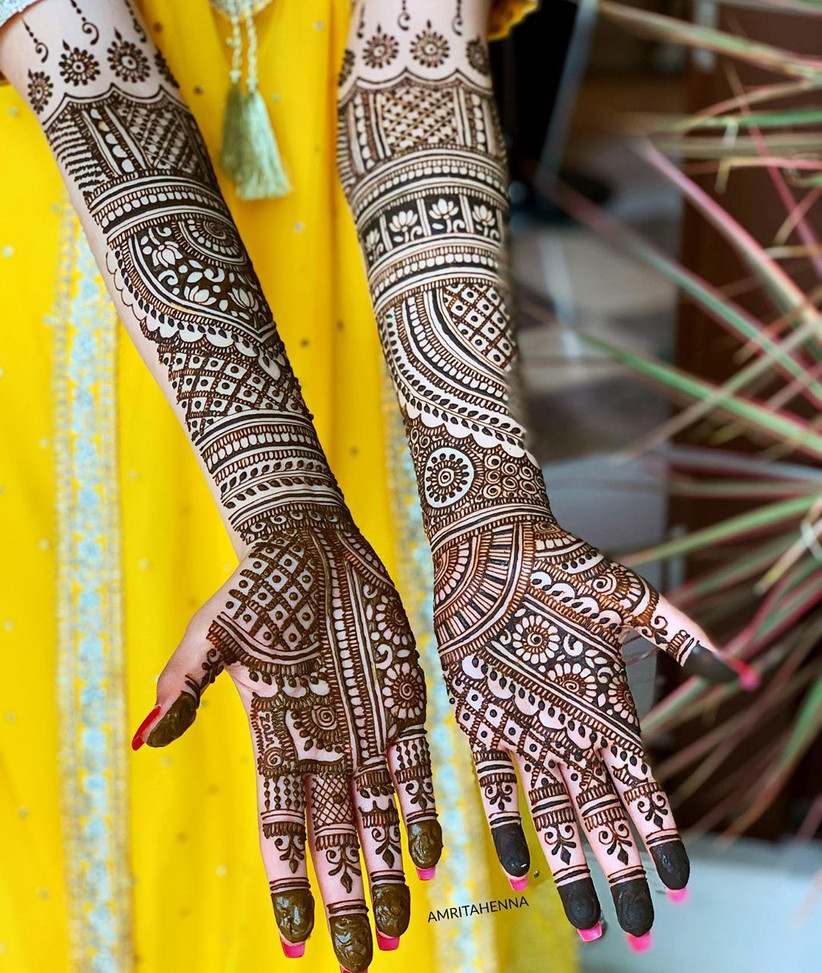
Rather than let that scene go to waste, I decided to share it with you today. Let me introduce the characters. Fiona is my protagonist, hailing from Iowa; Ameera is her Indian hostess; and Basanti is the bride they are visiting just days after her ten-day marriage ritual has been completed, which included painting her hands with henna. I hope you enjoy the scene and the visual examples of what they call mehndi (in English, mehendi) hands.
Mehendi Hands (A Scene from the book I couldn’t use.)
Basanti greeted Ameera and Fiona with “Namasté,” while they slipped off their shoes in the entryway. Fiona, embarrassed by her heavy work boots, placed them next to fine slippers, and silently promised to buy a pair for herself. When the new bride offered them a seat, Fiona saw the intricate henna stain snaking up the woman’s arm, a cluttered and confusing design.
After formalities, Ameera asked Basanti to show Fiona her palms. The warm orangey-brown henna ink climbed up the young bride’s wrists and wrapped to the forearm.
“Basanti’s mehndi hands are drawn with henna stain. A family member is typically the artist, like her sister-in-law.”
“Is that tradition?” Fiona asked. Tradition in Iowa consisted of a white or cream-colored dress, if the bride could afford it, then something old, something new, something borrowed, something blue, as the old adage went. Fiona had always thought it a lot of hoop-la, but nothing compared to this.
Ameera said, “Yes, a family member fits the art to the couple’s sign.”
“The couple’s sign? What do you mean?” Fiona asked.
“Their Vedic zodiac sign. If one is a Taurus, for instance, then a bull will be drawn. If they are from a particular caste, then certain gods may be etched to bless the couple.”
Fiona scanned the bride’s hands. “Why are the fingertips a solid color?”
Basanti said with delight, “My new sister-in-law, my husband’s brother’s wife, believes dark fingertips are a sign of good luck. She brought this tradition from her family to her husband’s—now it will be my family, also.” She allowed a slip of a smile to show pride in her new family. “I am pleased by the depth of color; I hope my touch will always be firm and healing.”
Fiona noted, “No two fingers are alike.”
“It is indeed special as a gift from my new sister. Do you not agree?”
“Yes, most beautiful.” Fiona was unaccustomed to using superlatives.
Basanti continued. “On the third day of celebration, the henna painting took place. My husband could not take me to bed until he found our names inscribed on my arms. He saw his name quickly but looked and looked for mine.”
She rolled her eyes. “Teasing me, he found mine before he even saw his own.”
Fiona, ill-at-ease with the topic of newlywed mating, changed the subject. “It appears the color is already fading in places. How long will it last?”
Ameera leaned forward to answer. “Basanti is not allowed to do housework until it is worn off. But by not working, it will last longer. Rubbing cream on it also makes it last. A husband may wonder, but he does not know it can be gone in days without much attention to delay homemaking.” The three laughed at keeping this kind of a secret.
Basanti confided. “I have watched henna painted on my sister, cousins, and friends, as new brides. I longed for my mehndi hands,” touching the red dot on her forehead, “and bindi.” American women used rouge on their cheeks, face powder, and lip color, but nothing as showy as this.
Basanti lightly rubbed her arms, admiring the art. “The day the henna stained my skin, I felt the most beautiful I have ever been. I now feel my inner light illuminating.”
Fiona did not grasp what it had to do with getting married. Too much ceremony for her.
Ameera riffled the bracelets on Basanti’s wrist. “These are a gift from her aunt and uncle. She wears the red ones a year to show she is a newlywed. Then her husband’s parents replace them at the end of year with gold or brass ones; and she takes over responsibilities of the entire household.”
Basanti said, “Many Hindu couples rush to marry the last week of April, like we did to avoid May, an inhospitable time of year to wed. Wednesday is the best day of the week, but also, our Vedic astrologer searched the position of the moon for us to determine the best time. It bodes well for our future together.”
Fiona admitted to the two women, “This is a bit overwhelming to me.”
When Ameera rose to leave and bid her friend farewell, Fiona pulled her boots back on as gracefully as possible and knew to expect the same slight bow and the “Namasté” greeting as they left.
Walking back, Fiona’s thoughts were all a-jumble by arranged marriages, superstitions, painted hands, signs, and bangle bracelets. In comparison, weddings in Iowa now appeared lackluster.
****
Please sign up with your email address, if you haven’t already, to get future messages from my blog. And stay on the look out for my upcoming novel, Song of Herself. Pre-order information will be coming soon. Thanks for stopping by to visit.